

If you’re considering braces for yourself or your child, you’ve probably already Googled the basics: How long will braces take? What foods should I avoid? How much will they hurt?
But spend a little time reading conversations from real orthodontic patients online, and you’ll find that the questions people really want answered go much deeper.
Will my teeth look strange while they’re moving? Could braces change my face? What happens if treatment doesn’t go exactly according to plan? And am I really going to have to wear a retainer forever?
At Pioneer Orthodontics, we believe patients should understand what orthodontic treatment is actually like and not just what the before-and-after photos show.
So we’re answering some of the questions patients often wish they’d asked before getting braces.
Quick Answer: What Should I Know Before Getting Braces?
Braces gradually move your teeth and improve your bite, but treatment is a process. You can expect some temporary soreness, changes in your smile along the way, needing some extra attention to brushing and flossing, and regular orthodontic appointments.
And when treatment is finished? Retainers become an important part of protecting your result.
Most importantly, don’t be afraid to ask questions. You should understand what your orthodontist is doing, why it’s being recommended, and what to expect along the way.
1. Will My Teeth Look Worse Before They Look Better?
Sometimes your smile can look a little different during treatment and that doesn’t necessarily mean something is going wrong.
Orthodontic treatment happens in stages. Teeth that were crowded or rotated begin moving into new positions, spaces may temporarily appear, and your bite may feel different as your teeth move.
What you see halfway through treatment isn’t the finished product.
Dr. Tewes says:
“I tell patients that orthodontic treatment is a process, and sometimes things can actually look a little worse before they look better. Halfway through, you’re seeing the work in progress, not the finished product.
It’s a little bit like remodeling a room. Halfway through the remodel, you might look around and think, “Woah what are we doing here?” But that doesn’t mean anything has gone wrong. It just means we’re not finished yet.”
2. How Much Do Braces Actually Hurt?
Getting braces shouldn’t mean months of pain.
Some patients experience pressure or soreness when braces are first placed and occasionally after adjustments. The first few days tend to require the biggest adjustment. Our patients rarely report any pain, but we know it can happen.
Your cheeks and lips may also need some time to get used to brackets and wires.
Soft foods, orthodontic wax, and a little patience usually make those first few days much easier.
What should I have at home before getting braces?
Basically, just some easy-to-eat foods! Maybe some yogurt, potatoes, rice, bread, soft fruits… Our patients rarely experience discomfort, but for some, adjusting to the hardware in your mouth the first few days might make eating a little bit uncomfortable. Soft foods help. See some ideas here.
You don’t need to build an elaborate “braces survival kit.” Most patients adjust surprisingly quickly.
We can hook you up with some lip balm, interdental brushes and flossing tools, and wax to help you out!
3. Can Braces Change My Face or Profile?
This is a question patients are asking more often, especially after seeing dramatic orthodontic before-and-after photos online.
Orthodontic treatment changes the position of your teeth and bite. Because your teeth provide support for your lips and surrounding soft tissues, certain orthodontic movements can sometimes create subtle changes in facial appearance or profile.
Children and teenagers are also growing during treatment, so some facial changes may occur naturally as they mature.
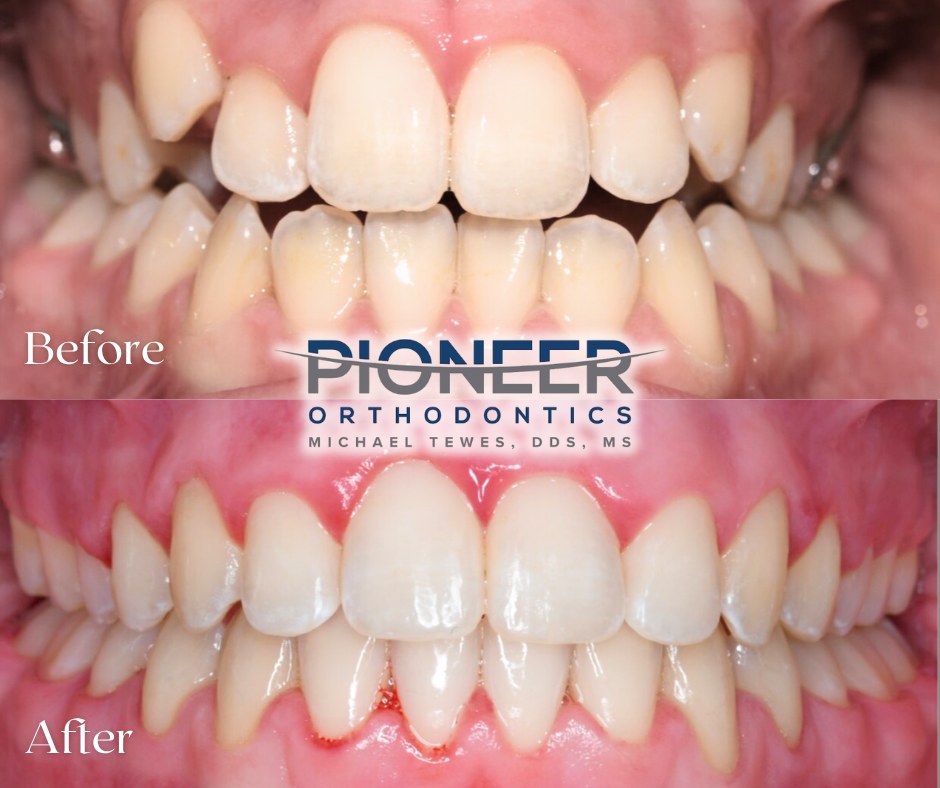
The amount of change depends heavily on the individual patient and treatment plan.
Dr. Tewes says:
“A part of planning your treatment is considering smile esthetics. We are looking at the width of your smile, smile symmetry, the smile arc, and so much more. Lining up your bite may also change your face and profile. Overall, we are trying to achieve a beautiful balance!”
4. Why Are My Teeth Moving So Fast at the Beginning?
This one surprises people.
During the first few months of braces, patients may see dramatic changes in crooked or crowded front teeth. It can feel like braces are working incredibly quickly.
Then progress may appear to slow down.
That’s because straight-looking teeth aren’t the same thing as finished orthodontic treatment.
After initial alignment, your orthodontist still has to work on details such as spacing, tooth position, and how your upper and lower teeth fit together.
The changes may become less obvious to you, but important work is still happening.
5. What If My Treatment Plan Changes?
Orthodontic treatment is carefully planned, but your teeth and body aren’t computer models.
Sometimes teeth respond differently than anticipated. Growth can change. A tooth may erupt differently. A treatment plan may need to be adjusted as new information becomes available.
That doesn’t automatically mean something went wrong.
What matters is communication.
If your orthodontist recommends changing the plan, you should feel comfortable asking:
Why are we changing course? What are our options? What happens if we don’t make this change?

Dr. Tewes says:
“First and foremost, we are a TEAM. I’m working with you to plan treatment and I want to hear your questions and concerns. We are carefully assessing your progress at every appointment. Each one of those adjustments matter and we tailor it specifically to YOU and how your teeth respond. In the end, we will get you an amazing smile! There are many roads to get there and sometimes we just need to take a different one.”
6. Will I Really Have to Wear a Retainer Forever?
This might be the biggest “I wish someone had told me” lesson in orthodontics.
Teeth naturally continue to shift throughout life. Braces move them into their new positions, but removing the braces doesn’t eliminate that natural tendency.
The exact retainer schedule varies by patient, but long-term retainer wear is typically necessary if you want to maintain your orthodontic result.
Many adults seeking orthodontic treatment for a second time had braces when they were younger but eventually stopped wearing their retainers.
Think of retainers as protecting the investment you’ve already made in your smile.
“Nightime for a lifetime!” is what we tell our patients.
7. Is Cleaning Your Teeth With Braces Really That Much Harder?
It takes more effort, but it eventually becomes routine.
Brackets and wires create additional places for food and plaque to collect, which makes thorough brushing and flossing especially important during treatment.
Many patients find tools such as interdental brushes, floss threaders, or water flossers helpful. We like to give patients platypus flossers.
The goal isn’t perfection after every bite of food. It’s developing consistent habits that keep your teeth and gums healthy throughout treatment.
8. What Happens If I Break a Bracket or Have a Poking Wire?
First: don’t panic.
Broken brackets and irritating wires occasionally happen during orthodontic treatment.
Orthodontic wax can temporarily cover an irritating area. If something breaks or feels uncomfortable, contact your orthodontic office so the team can tell you whether it needs to be addressed right away or can wait until your next appointment.
And yes, avoiding very hard, sticky, or chewy foods really does reduce the chances of breaking something.
9. Can I Speak Up If Something Doesn’t Feel Right?
Please do!
Orthodontic treatment should be a conversation.
If you’re concerned about how your bite feels, something looks different than you expected, an appliance is uncomfortable, or you simply don’t understand why something is being done, ask.
A good orthodontic team wants to know what you’re experiencing.
Parents should encourage children and teenagers to speak up, too. Sometimes they’ll notice something that isn’t obvious during a brief office visit.
You aren’t being difficult by asking questions about your treatment.
10. Is Getting Braces Actually Worth It?
For most patients who need orthodontic treatment, the goal goes far beyond having straighter front teeth.
Orthodontic treatment can improve how the teeth fit together, address crowding or spacing, and create a smile that’s easier to maintain.
But braces require commitment.
There will be appointments. There might be a few sore days. You’ll have to clean around brackets, remember elastics if they’re prescribed, and eventually wear your retainers.
And that’s something we think patients deserve to know before they start.
Frequently Asked Questions About Getting Braces
How long does it take to get used to braces?
The first several days are usually the biggest adjustment. Your teeth may feel sore and your cheeks and lips need time to adapt to the brackets, but most patients settle into their new routine fairly quickly.
Do braces hurt every time they’re adjusted?
You may experience temporary pressure or soreness following some appointments, but it shouldn’t feel like constant pain throughout treatment. Our patients rarely report discomfort.

Can my teeth shift in unexpected ways during braces?
Teeth move in stages, so temporary spaces or changes in your bite can occur during treatment. If something concerns you, ask your orthodontist rather than assuming something is wrong.
Will braces permanently change my face?
Orthodontic treatment can influence facial appearance by changing tooth and bite position, but the effect varies significantly from patient to patient. Age, growth, facial structure, and the specific treatment plan all matter. Here’s more about this.
What is the biggest mistake patients make during braces?
There’s no single answer, but inconsistent elastic wear, poor oral hygiene, repeated broken appliances, missed appointments, and not wearing retainers afterward can all interfere with treatment or long-term results.
Can I get a second opinion before getting braces?
Yes. Orthodontic treatment is a significant decision, and you should feel comfortable understanding your diagnosis, treatment options, and why a particular approach is being recommended.
What Does Dr. Tewes Wish Every Patient Knew Before Starting Braces?
Dr. Tewes says:
“Braces are something we do with you as a team..not to you.
The goal is more than straight teeth. We want you to have great function and a smile that you love. We also want to be a bright spot in your day each and every time you come in.
Excellent orthodontics is only part of the equation – your smile matters, but you matter more.”
Considering Braces in Lincoln or York, Nebraska?
Reading about other people’s experiences can be helpful, but orthodontic treatment is highly individualized.
At Pioneer Orthodontics, Dr. Michael Tewes and our team care for children, teens, and adults in Lincoln, York, and surrounding Nebraska communities. Our goal is to make sure you understand not only what we’re recommending, but why we’re recommending it.
If you’re considering braces for yourself or your child, a complimentary orthodontic consultation is an opportunity to ask all of these questions, and any others you have, before deciding whether treatment is right for you.