
Your child’s permanent teeth are starting to come in, and suddenly you’re noticing things. One tooth looks crooked. Another seems to be coming in behind the others. Maybe their bite just doesn’t look quite right.
And you’re wondering: Does my child need braces, or is this just a normal part of growing up?
The answer isn’t always obvious. Some changes are completely normal as children lose baby teeth and develop their permanent smiles. Others may be early signs of an orthodontic concern worth evaluating.
At Pioneer Orthodontics, Dr. Michael Tewes helps families throughout Lincoln, York, and southeast Nebraska understand what’s happening with their children’s developing smiles and whether treatment is actually necessary.
Here are seven signs parents can watch for, including a few that might surprise you.
Quick Answer: How Do I Know If My Child Needs Braces?
Your child may benefit from an orthodontic evaluation if you notice crowded or overlapping teeth, unusual spacing, early or late loss of baby teeth, difficulty chewing, teeth that don’t fit together properly, or changes in jaw alignment.
But noticing one of these signs doesn’t automatically mean your child needs braces.
The American Association of Orthodontists recommends a first orthodontic evaluation by age 7, even when teeth appear straight. An orthodontist can determine whether treatment is needed now, later, or possibly not at all.
1. Their Permanent Teeth Are Coming In Crooked or Overlapping
This is probably the most recognizable sign parents notice.
As permanent teeth begin erupting, you might see one tooth coming in behind another, teeth twisting to fit into limited space, or significant crowding along the front teeth.
Some irregularity is common during the transition from baby teeth to permanent teeth. But crowding can also indicate that there isn’t enough room for the developing adult teeth.
What parents should watch for: Teeth that overlap significantly, permanent teeth erupting in unusual positions, or teeth that appear blocked from coming in normally.
An orthodontic evaluation can help determine whether there’s adequate space for the remaining permanent teeth.
2. Baby Teeth Are Falling Out Much Earlier..or Later..Than Expected
Every child loses baby teeth on their own timeline.
But the timing and sequence of tooth loss can provide important clues about how permanent teeth are developing.
Losing a baby tooth unusually early can sometimes allow neighboring teeth to shift into the available space. A baby tooth that stays in place much longer than expected may occasionally signal that the permanent tooth underneath isn’t developing or erupting normally.
What parents should watch for: A noticeable difference between the two sides of the mouth, permanent teeth erupting while baby teeth remain in place, or unexpected gaps in tooth development.
If something seems unusual, an orthodontist can evaluate what’s happening beneath the surface.
3. Their Top and Bottom Teeth Don’t Fit Together Properly
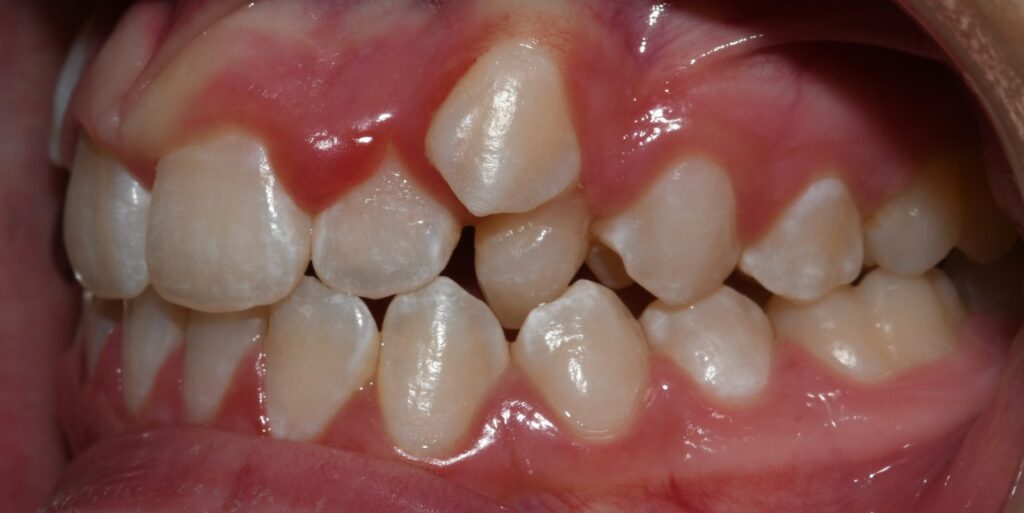
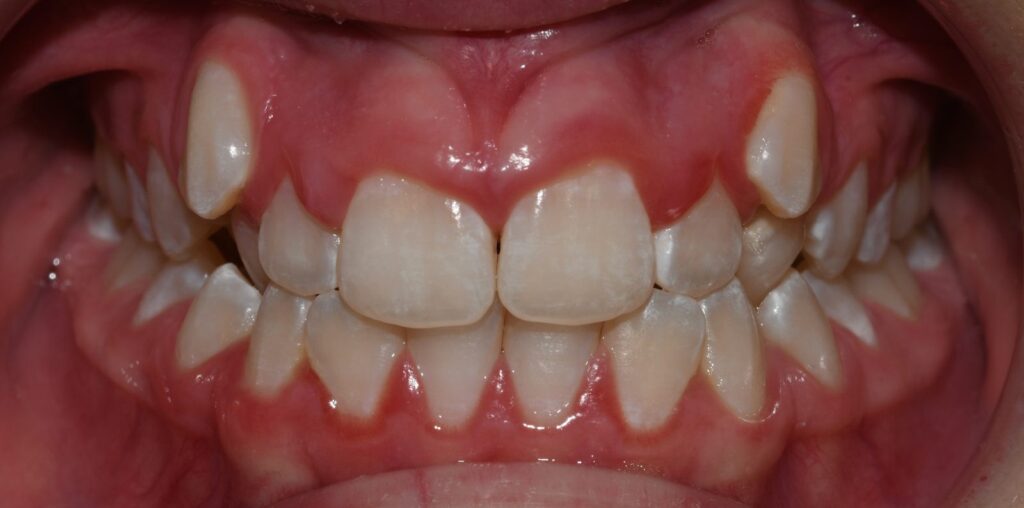
Here’s something many parents don’t realize: Orthodontics is about more than straight teeth.
Even children with relatively straight-looking smiles can have bite problems.
Some examples include:
- Crossbite: Certain upper teeth sit inside the lower teeth when biting.
- Underbite: The lower front teeth sit ahead of the upper front teeth.
- Open bite: The front teeth don’t touch when the back teeth are together.
- Deep bite: The upper front teeth overlap the lower front teeth excessively.
Not every bite difference requires immediate treatment. However, certain bite problems may benefit from evaluation while a child is still growing.
What parents should watch for: Ask your child to bite down naturally and smile. Do the teeth meet comfortably, or does something look noticeably uneven?
You don’t have to identify the specific bite problem yourself. That’s what the orthodontic evaluation is for.
4. They Have Difficulty Biting or Chewing
Does your child struggle to bite into a sandwich? Avoid certain foods because they’re difficult to chew? Frequently bite their cheek while eating?
Sometimes these behaviors have nothing to do with orthodontics. But in other cases, they can indicate that the teeth aren’t meeting or functioning together as they should. A child might have a hard time putting that into words.
What parents should watch for: Repeated difficulty biting through food, uncomfortable chewing, or frequent accidental cheek biting.
Persistent pain or difficulty eating should also be discussed with your child’s dentist or pediatrician.
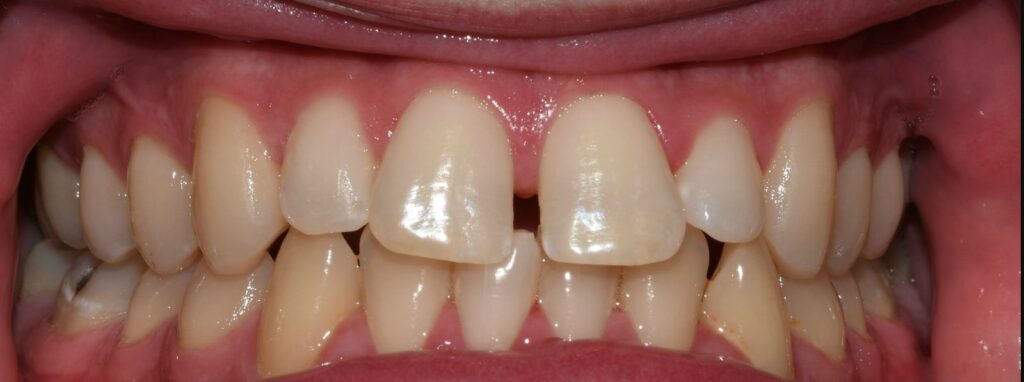
5. Their Jaw Shifts to One Side When They Bite
This is one of the less obvious signs parents may overlook.
When a child’s teeth don’t fit together properly, they may shift their lower jaw slightly to one side to find a comfortable biting position.
Over time, certain bite-related shifts may affect how the teeth and jaws function together.
What parents should watch for: Your child’s chin moving noticeably to one side when closing their teeth, an uneven bite, or a jaw that seems to shift into position.
This is a particularly valuable observation to share with an orthodontist because certain crossbites and functional jaw shifts may benefit from earlier attention.
Dr. Tewes’ perspective:
“Certain crossbites associated with these shifts may benefit from early correction rather than waiting until all permanent teeth erupt.”
Source: AAPD | Management of the Developing Dentition and Occlusion in Pediatric Dentistry
6. They Frequently Breathe Through Their Mouth or Have Persistent Oral Habits
Mouth breathing, prolonged thumb sucking, and certain oral habits can be associated with changes in how the teeth and jaws develop.
For example, prolonged thumb sucking may contribute to changes in the position of the front teeth or the way the bite comes together.
Mouth breathing is more complicated. It can have several causes, including nasal obstruction, allergies, or enlarged tonsils and adenoids. An orthodontist can evaluate associated dental and jaw development, but breathing concerns may also require assessment by a pediatrician or ENT specialist.
What parents should watch for: Persistent thumb or finger sucking beyond early childhood, difficulty keeping the lips together comfortably, or habitual mouth breathing.
These signs don’t automatically mean braces are needed, but they can be worth discussing.
7. Their Teeth Look Straight, but Something About Their Bite Seems Off
This might be the most surprising sign on the list.
A child can have beautifully aligned front teeth and still have an orthodontic problem.
Why?
Because the appearance of the front teeth doesn’t tell us everything about jaw growth, permanent teeth developing beneath the gums, or how the upper and lower teeth fit together.
An orthodontic evaluation considers the entire developing bite—not just the visible smile.
A bite can impact how the teeth wear over time and impacts the jaw as well.
What parents should watch for: Teeth that don’t meet evenly, front teeth that protrude significantly, an unusual bite relationship, or concerns raised by your child’s dentist.
And sometimes, there are no visible warning signs at all.
That’s one reason an early orthodontic evaluation can be helpful.
Does My Child Need Braces at Age 7?
Not necessarily!
The American Association of Orthodontists recommends that children have their first orthodontic evaluation no later than age 7.
But age 7 is the recommended age for an evaluation—not an automatic starting age for braces.
At this stage, children typically have a combination of baby and permanent teeth. That gives an orthodontist an opportunity to evaluate developing bite relationships, jaw growth, and the positions of permanent teeth.
Some children may benefit from early orthodontic treatment, sometimes called Phase 1 treatment.
Many others simply need time to grow.
And some children may not need orthodontic treatment at all.
Dr. Tewes’ perspective:
Does an Orthodontic Evaluation at Age 7 Mean My Child Needs Braces?
Not necessarily! In fact, many children who visit Pioneer Orthodontics at age 7 don’t need treatment right away.
“Our goal is not to start treatment as early as we possibly can. It’s to start treatment at the right time,” explains Dr. Michael Tewes, board-certified orthodontist at Pioneer Orthodontics.
An early orthodontic evaluation allows Dr. Tewes to assess how your child’s teeth and jaws are developing, identify concerns that may benefit from early intervention, and create a plan for monitoring future growth.
Sometimes early treatment is beneficial. Other times, the best approach is simply to wait and allow your child to continue growing.
At Pioneer Orthodontics, these initial evaluations are complimentary. Families leave with a better understanding of their child’s orthodontic development, what to watch for, and when treatment might be appropriate.
The goal isn’t braces at age 7. It’s making sure your child’s smile is developing on the right track.
What If My Child Has Crooked Teeth but Isn’t Ready for Braces?
Sometimes the most appropriate recommendation is to wait.
At Pioneer Orthodontics, children who aren’t ready for treatment can participate in our complimentary observation program.
This allows our team to monitor growth, tooth eruption, and bite development over time.
Rather than starting treatment simply because a child has some crooked teeth, the goal is to identify the right treatment—at the right time.
For parents, that means having a plan instead of wondering whether they’re missing something important.
Frequently Asked Questions About Kids and Braces
Can my child need braces even if their teeth look straight?
Yes. Straight front teeth don’t necessarily mean the bite and jaws are developing normally. An orthodontist can identify concerns that aren’t obvious from looking at the smile alone.
Should I wait until all my child’s baby teeth fall out?
No. Children can benefit from an orthodontic evaluation while they still have baby teeth. Certain developing problems are easier to identify and may be more appropriately addressed before all permanent teeth erupt.
Is age 8, 9, or 10 too late for a first orthodontic evaluation?
Not at all. Although age 7 is the recommended time for an initial checkup, older children can still benefit from an orthodontic evaluation. If your child hasn’t had one yet, it’s reasonable to schedule a visit.
Does every child with crowded teeth need Phase 1 treatment?
No. Some crowding can be monitored until more permanent teeth erupt. Whether early treatment is beneficial depends on the severity of the crowding, jaw development, and the position of developing teeth.
Can an orthodontist tell if my child will need braces later?
An orthodontist can evaluate current development and identify signs that treatment may be beneficial in the future. However, growth and tooth eruption can change over time, so recommendations may evolve. That’s exactly why we have our Kids Club (observation program), so we can continue to watch the development and adjust the plan if needed.
Do I need a dentist’s referral to schedule an orthodontic consultation?
No. Parents can schedule an orthodontic evaluation directly, even if their family dentist hasn’t recommended one.
Is an orthodontic consultation free at Pioneer Orthodontics?
Yes! Pioneer Orthodontics offers complimentary initial consultations at our Lincoln and York locations. It’s an opportunity to learn about your child’s developing smile, ask questions, and understand whether treatment is recommended.
The Most Important Thing Parents Should Know
You don’t have to figure out whether your child needs braces on your own.
And you certainly don’t need to wait until their teeth look noticeably crooked before asking questions.
An early orthodontic evaluation is simply a way to understand how your child’s smile is developing and whether anything needs attention.
At Pioneer Orthodontics, Dr. Michael Tewes and our team help families in Lincoln, York, and surrounding southeast Nebraska communities make informed decisions about orthodontic care.
Wondering if your child needs braces?
Schedule a complimentary orthodontic consultation at Pioneer Orthodontics. We’ll help you understand what we’re seeing, what it means for your child’s development, and whether treatment is needed now—or whether the best next step is simply to keep growing.
No pressure. Just answers and a plan for your child’s smile.